Decks · Home Ideas
Compare composite and pressure-treated deck materials for Raleigh homes: starting cost, maintenance, appearance, heat, railings and long-term planning.
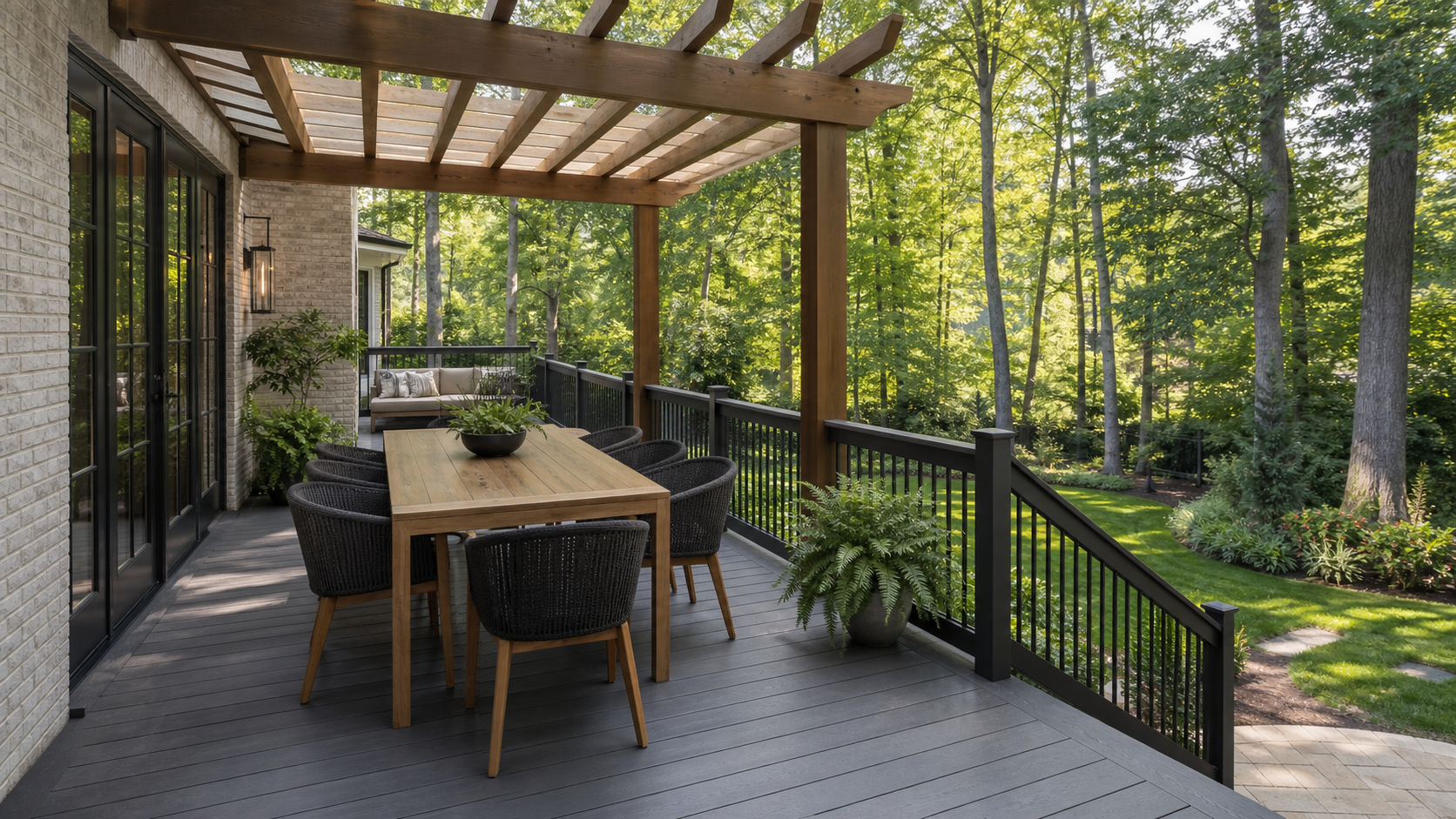
Composite and pressure-treated wood are both practical deck materials, but they create different ownership experiences. The better fit depends on your goals for appearance, maintenance, initial investment, sun exposure, and the overall outdoor-living plan.
Starting cost and long-term care
Pressure-treated wood usually has a lower material starting point and offers a traditional look with flexible stain choices. It benefits from consistent cleaning, sealing, and care over time. Composite typically requires a higher initial material investment but is chosen by many homeowners for its lower routine upkeep and color consistency.
Appearance and layout possibilities
Both materials can support a high-quality project when the details are planned intentionally. Board direction, picture-frame borders, stairs, fascia, rail systems, lighting, and the way the deck meets the home all affect the finished result. Composite gives access to a broad range of manufactured colors and textures; wood provides a familiar natural grain that can be stained.
Raleigh sun and everyday use
Consider where the deck will receive direct sun, where people will walk barefoot, how the household uses the space, and how often it will be cleaned. Those practical questions are often more useful than a generic material ranking.
The material is only one decision
The condition of the framing, footings, drainage, railings, and stairs matters as much as the surface boards. A site review helps place the board choice in the larger build plan.
Plan your next step
For a closer look at low-maintenance options, explore our composite deck page. Review our custom deck services or request a consultation for a project-specific conversation.